Home >> Nature >> Bear

Brown bear - Spirit of the forest

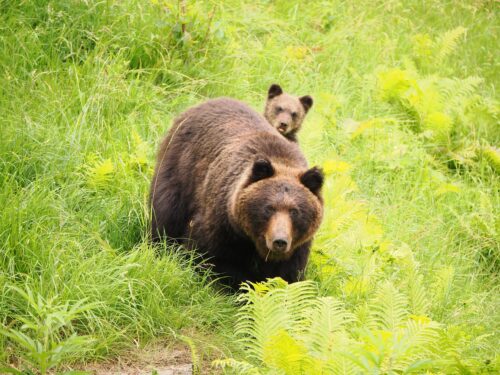
photo:Shiretoko Nature FoundationBrown bear is called KIMUNKAMUI in Ainu language, meaning the diety of mountains
Largest terrestrial carnivore in Japan.
Adult male:100~350kg Adult female : 80~150kg
Body color varies from light brown to dark black.
Light colored chest sings on some bears.
Despite its burly appearance the brown bear is 90% vegetation.

The puzzle of denning

Among the larger bodied mammals, only the bear dens in winter.
Indeed, in the middle of a long winter without nourishment, female bears even manage to give birth and raise young.
Although weighing only 400 grams at birth in the coldest days of late January, cubs that emerge with their mothers in May have grown to 6kilograms.
The sows of Shiretoko usually give birth every two years, a high reproductive natural environment.

Shiretoko :A haven for the Brown Bear

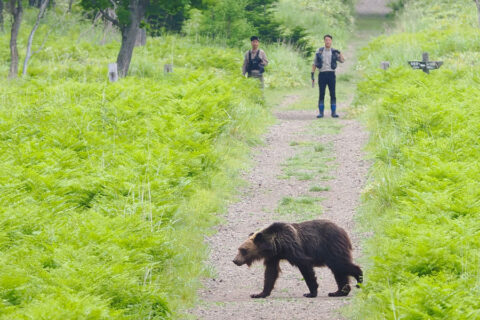
photo:Shiretoko Nature FoundationShiretoko boasts one of the world's highest densities of brown bears -more than 1bear / 3sq.km.It would be no exaggeration to call it the most densely populated.
Female home ranges are typically only 15 sq.km.,a reflection of the wealth of natural foods available in a small area between the coast and the mountain peaks.

Brown bear habitats with the wealth of foods available in Shiretoko are uncommon in the world.
While brown bears in the North American interior rely on about 40 different food items, the bears of Shiretoko have access to over 90.
From grasses and forbs along the coast and in the alpine zones, to nuts and berries of the forest, to the streams filled with salmons and the whales and seals that wash up on the coast, a rich assortment of food supports the high density of bears in Shiretoko

Shiretoko :From the Coast to the Mountain Tops, All is Home of the Bear

photo:Shiretoko Nature FoundationBrown bears inhabit a broad range in both the Eurasian and North American continents.
However, even this distribution represents only a fraction of the historic range.
Conflicts between people and bears continue today, as does range decline.

there are few places left like Hokkaido, where brown bears still inhabit temperate zone, mixed conifer-hardwood forest.
Hunting pressures and land conversion, particularly in coastal areas, have taken their toll on brown bear populations throughout the world.
In the protected wild lands of the Shiretoko peninsula, however, bears can still move freely among a rich variety of coastal ,forest, and alpine habitats.